Critical Question
* How might we make the aquarium experience more interactive for a child without the use of screens?
The Brief
I approached the Ucluelet Aquarium in 2025 with an idea about visual encoding while recognizing a unique oppertuinity in the space surrounding data and tracking. My project was re-factored with a new problem set by my team lead Meredith, who at the time was looking to refresh and update all the signage at the aquarium as well as construct a new "play area" that highlighted the diversity of the plankton and fish in the Clayquot Sound.
The original scope of the project was to work on how we could combine interactive learning with visuals, working with childrens natural inclination to move and play within an exploratory space. We later found a need to redo the signage around the aquarium which took priority.
Design Opportunities
During the initial discovery phase I led a small interview round table with the lead curator and my coordinator. Through these meetings we found 2 pain points that plagued visitors:
- Visually the signs are extremely hard to read in a space which doesn't get a lot of natural light
- Guests sometimes are confused as there are no visual cues to help guests search for animals
Species Labels
In order to update the 108 labels and as a part of truth and reconcillation we chose to include the NuulChaNuth names along side the latin names where available. Labels were sorted into 3 catagories (Invertebrates, Plants + Algae , Fish) and were printed on Alu-panel for extra durability.
In the redesigns, we explored how color could be a gateway to cue based learning. By sorting animals into phyla, we were able to assign a distinct color to each biological grouping, creating a visual thread that connected creatures that might look nothing alike e.g.(sea urchin vs sea star) for instance, share little visual resemblance, but both belong to Echinodermata.
01 / 10
← move mouse to scrub →
FRAME 01
TOTAL 10

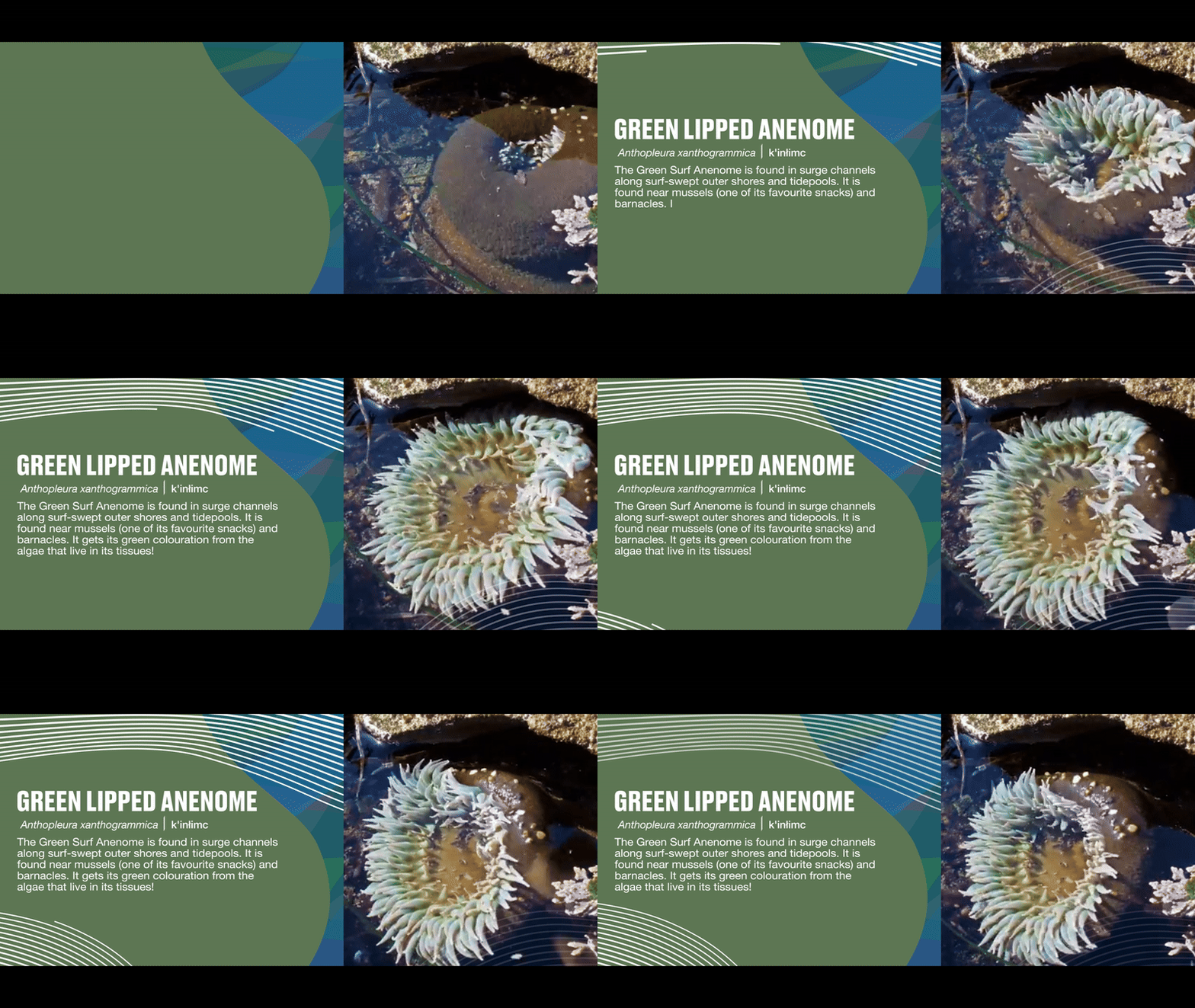
Some speculation on converting the signs for video and motion displays.